Why the 1% Keeps Winning: The Small Exception That Undoes a Decision to Quit
 By Devin McDermott, porn recovery coach
He's 99% done with porn, but he keeps one exception in his back pocket: 'unless it's been a brutal week.' Why that 1% keeps winning, and how it grows.
I have a take that can be hard to swallow.
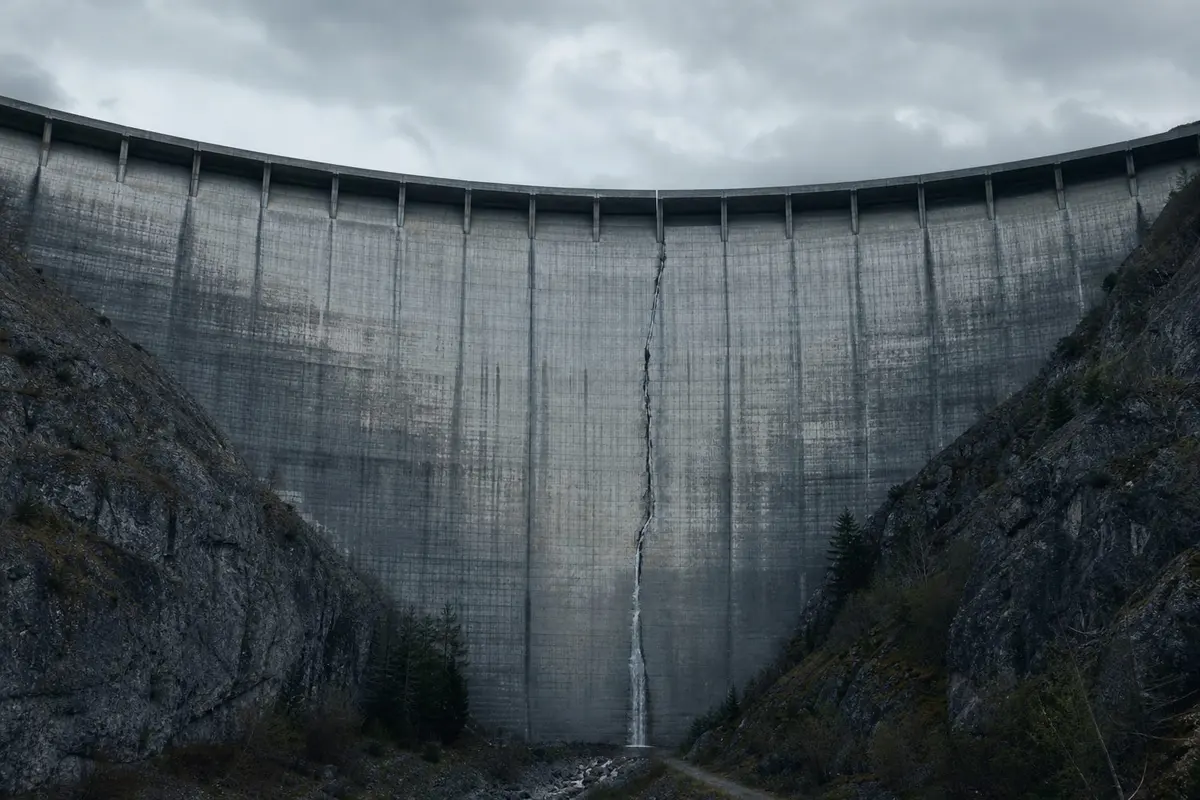
A 99% made decision is the same as 0%.
Only 100% works long-term.
Otherwise the 1% grows until it overpowers the other 99.
The Exception in His Back Pocket
Picture a guy who decides he's done with porn and he means it, strongly.
Maybe even with 99% of his being.
But he keeps one small exception in his back pocket:
"Unless it's been a really brutal week."
Or, "One last time, and then I'm done for real."
On a normal day, that 1% is easy to ignore and he feels good about his decision.
How the 1% Grows
But the 1% only has to win once.
And every day that the man's 99% commitment carries on, the force of uncertainty behind that 1% that isn't fully committed grows.
Every time it wins a little mental bout, it gets a little bigger.
Until eventually the 1% that isn't fully onboard with his choice ends up overpowering his decision, and he ends up right back where he started.
This is how men can stay stuck in the cycle for decades, despite feeling like they've fully committed many times.
Reality is that something inside of them isn't fully onboard yet.
And the work is in figuring out what that is, and fixing it.
I know this well because for the last 7 of my 13 years on porn, I promised myself "never again" weekly.
I decided to quit long before I actually managed to do it.
And looking back, I think the difference between the two was that last 1%.
A Backup Plan Makes the Goal Matter Less
Researchers have found something close to this in a very different setting.
In 2016, Jihae Shin and Katherine Milkman ran three experiments where people worked on a task for a small reward, like a snack or the chance to leave early. Some of them were first asked to think through a backup plan, in case the task didn't go well.
The people who made a backup plan did worse on the task than the people who didn't.
The researchers traced that drop to wanting. Thinking through a plan B made people want the main goal less.
That's what the exception in his back pocket is. A backup plan.
"Unless it's been a really brutal week" quietly tells him the decision isn't final. And a decision that isn't final doesn't get his full effort on the hard nights, which are the nights that decide whether it holds.
So when the brutal week finally comes, the exception barely has to argue. He signed off on it back when he was feeling strong, and using it feels like part of the deal he made with himself.
Wanting Two Things at Once
Counselors who use motivational interviewing have a name for the state that guy is in. They call it ambivalence: wanting to change and not wanting to, at the same time.
And they see it as a normal part of the process.
That's good news for a guy who keeps slipping, because he tends to decide the problem is him. He figures if he really wanted to quit, he'd be done by now. But he can want it badly and still have a part of him that isn't ready to let go.
That other side shows up in what a person says. In a 2014 analysis of motivational interviewing studies, the more a person argued for not changing, the worse their outcomes tended to be.
For a guy quitting porn, that side usually sounds harmless. It talks in small exceptions: "unless," and "one last time," and let me just test it.
So those little exceptions are worth listening to. Each one is the 1% talking, and it's telling him what that part of him still needs porn for.
Questions Guys Ask Me About This
Why do I keep relapsing even though I really want to quit?
For a lot of guys, it's because "really wanting to" is 99%, and there's a small exception left over. The exception stays quiet on normal days. But on hard days it gets a vote, and over time it wins more of those votes. Wanting to quit and being fully done can feel identical right up until the night they aren't.
Is it normal to want to quit porn and still want to watch it?
Yes. Counselors who use motivational interviewing call it ambivalence, and they see it as a normal part of change. Both sides are real. The part of him that still wants porn is pointing at something porn has been doing for him, like getting him through a brutal week, and that's where to look.
Is it okay to let myself watch porn only on really bad weeks?
It sounds like a reasonable compromise, but it leaves the decision open, and the bad weeks are exactly the ones that test it. That's the back-pocket exception this whole post is about. A guy whose recovery only holds when life is easy has what I call fair weather sobriety.
Why does "one last time" never turn out to be the last time?
Because "one last time" is the easiest exception to agree to. It sounds like the end of the habit, so saying yes to it feels like progress. But the need behind it is still there the next morning, and on the next hard night it comes back with a new reason. That's the 1% winning a little bout, and every win makes it a little bigger.
Why do I relapse right after promising "never again"?
Because the promise only speaks for the part of him that's already decided. That part means every word. But the 1% never signed on to it, and the 1% is what shows up on the hard night. I made that promise every week for 7 years. A promise can be completely sincere and still not hold.
What does being 100% committed to quitting porn actually mean?
It means there's no "unless" left, not even for a brutal week. A guy gets there by finding the part of him that isn't on board yet and meeting the need it's been using porn to fill. Once that need gets met without porn, the exception has nothing left to argue for.
Get the next one tomorrow.
These posts start as my daily email. One short email a day on why the habit runs and how to take it apart. 3,965+ men read it.
I was hooked on porn for 13 years. I've been free for nearly six, and I've coached 170+ men through it since. No shame, no lectures.
Keep reading
 Why a Guy Keeps Going Back to Porn Even After He's Decided to Stop8 min read
 Why Months Off Porn Can Fall Apart in One Bad Week7 min read
 Why 'Just Stop' Rarely Works on a Habit a Guy's Been Hiding for Years7 min read
 Why a Man Who Answers to Nobody Still Can't Leave Porn Alone7 min read
 The Difference Between Staying Off Porn and Being Done With It7 min read
 TRT Fixed Everything but the Bedroom7 min read
 Why Porn Keeps Coming Back for a Guy Who Barely Watches It7 min read
 The Restaurant Test: Why a Guy Can Love Her and Still Drift Off at Dinner7 min read
Sources
- In three experiments with small rewards (like a snack or leaving early), people asked to think through a backup plan performed worse on their main goal, because the backup plan reduced their desire for it: Shin, J., & Milkman, K. L. (2016). How backup plans can harm goal pursuit: The unexpected downside of being prepared for failure. Organizational Behavior and Human Decision Processes. Penn CHIBE summary.
- Ambivalence (wanting and not wanting to change at the same time) in motivational interviewing: Miller, W. R., & Rollnick, S. (2013). Motivational Interviewing: Helping People Change (3rd ed.). Guilford Press.
- In a meta-analysis of motivational interviewing studies, more "sustain talk" (statements for not changing) predicted worse outcomes (the authors called the finding preliminary): Magill, M., Gaume, J., Apodaca, T. R., et al. (2014). The technical hypothesis of motivational interviewing: A meta-analysis of MI's key causal model. Journal of Consulting and Clinical Psychology, 82(6), 973-983.